
Cat Behavior
Why Won't My Cat Drink Water From a Bowl?
Your cat ignoring the water bowl isn't stubbornness — it's instinct. Here are the six most common reasons cats refuse bowls, and what actually...

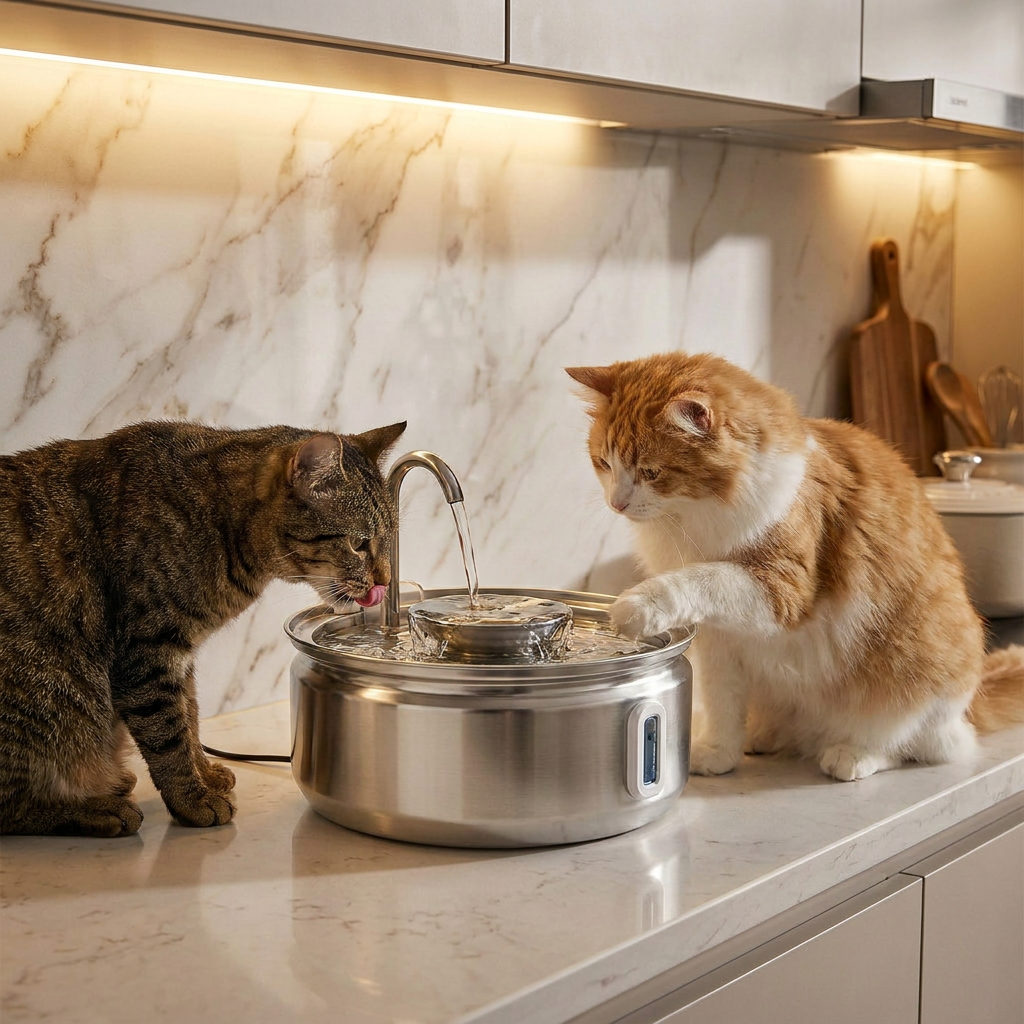
The short answer: a healthy adult cat needs roughly 3.5–4.5 ounces of water per 5 pounds of body weight per day. For a typical 10-pound cat, that's about a cup of water daily — from all sources combined.
Cats on wet food get a head start — canned food is roughly 75–80% water, so a wet-fed cat may only need to drink a few extra ounces. Dry-fed cats need to drink nearly all of their daily water, which is where many fall short.
Cats evolved as desert hunters who got most of their moisture from prey, so their thirst drive is famously weak. A cat can be 3% dehydrated before showing any obvious signs. Still water compounds the problem: instinct tells cats that stagnant water may be unsafe, so a bowl that sits all day simply gets ignored.
If you see these persistently, talk to your veterinarian — chronic low intake stresses the kidneys and urinary tract over time.
1. Moving water. Flowing water reads as fresh and safe to a cat's instincts — it's the single most reliable upgrade. That's the entire reason cat water fountains exist, and why picky drinkers take to them.
2. Fresh-tasting water. Water that sits picks up odors and dust. Activated-carbon filtration keeps it crisp — our filters pack ~6–7g of carbon and last a full month.
3. The right vessel. Wide, shallow, and stainless steel. Plastic holds odors and can irritate chins; deep narrow bowls annoy whiskers.
4. Location. Away from the litter box and food bowl — cats prefer to drink away from where they eat.
Know your cat's target (3.5–4.5 oz per 5 lbs), watch the litter box, and make water appealing instead of hoping your cat powers through a stale bowl. A month of flowing, filtered water usually settles the question for good.
Your cat ignoring the water bowl isn't stubbornness — it's instinct. Here are the six most common reasons cats refuse bowls, and what actually...
A cat fountain only works if it stays clean. Here's the realistic 5-minute monthly routine — what to scrub, what to just rinse, and...
