
Fountain Care & Cleaning
How to Clean a Cat Water Fountain in 5 Minutes (Step-by-Step)
A cat fountain only works if it stays clean. Here's the realistic 5-minute monthly routine — what to scrub, what to just rinse, and...

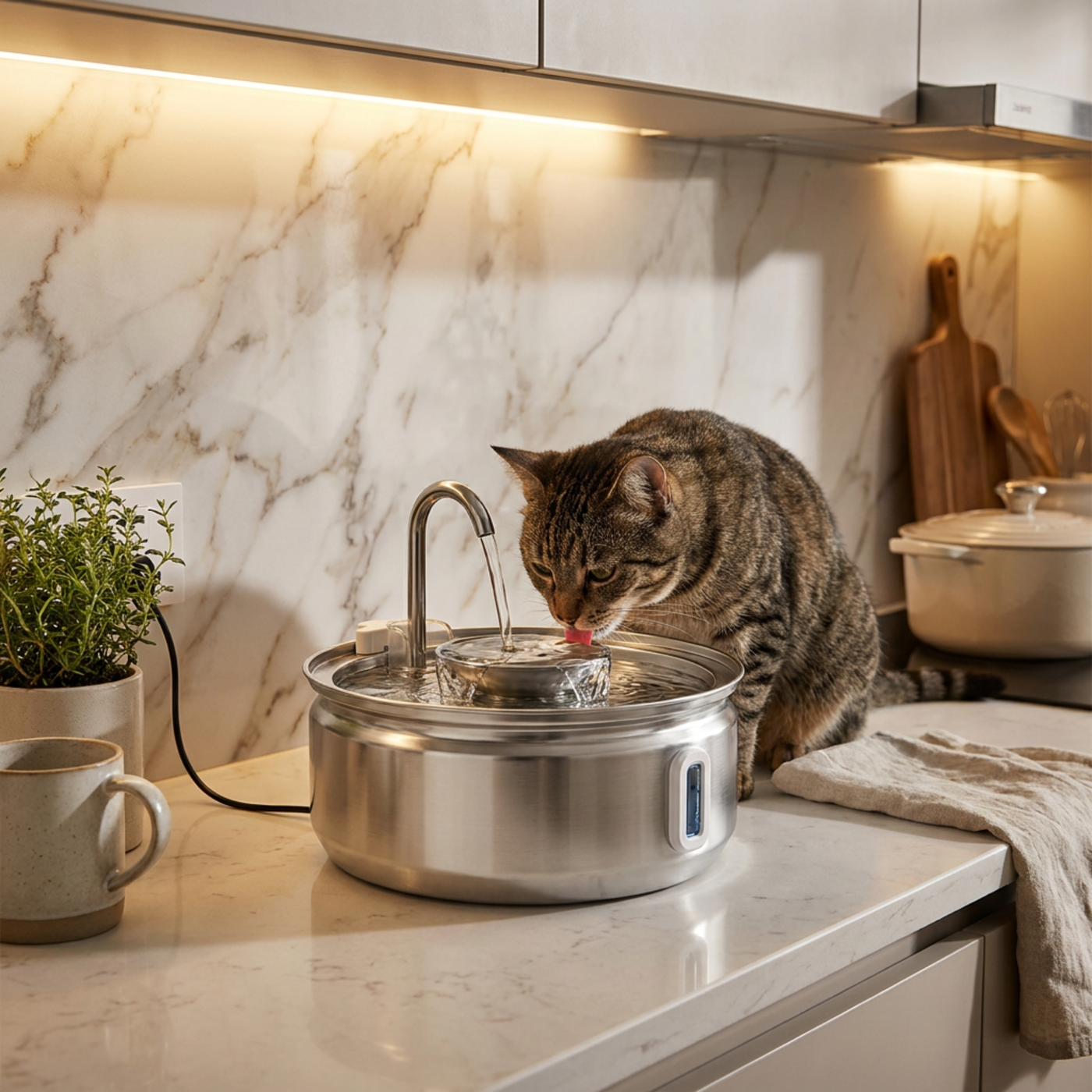
If your cat sniffs the water bowl and walks away — then begs to drink from your faucet — nothing is wrong with your cat. Almost everything about a standing bowl of water conflicts with feline instinct. Here's what's going on, and what fixes it.
In the wild, stagnant water is where bacteria and parasites live; moving water is fresh. Millions of years of instinct tell your cat the same thing, which is why the dripping tap is irresistible and the bowl is invisible. This is the single biggest reason fountains convert bowl-refusers.
Deep, narrow bowls press a cat's whiskers against the sides with every sip — genuinely unpleasant for an organ that sensitive. Wide, shallow drinking surfaces solve it.
Water that sits absorbs odors, dust, and food particles. Cats have a keen sense of smell and will refuse water we think is fine. Activated-carbon filtration keeps water crisp — it's why we pack ~6–7g of carbon into every Dripurr filter.
Plastic scratches easily, and those scratches harbor bacteria and off-tastes (they're also the leading cause of feline chin acne). Stainless steel is non-porous and neutral-tasting.
Cats won't drink next to the litter box, and many dislike drinking right beside their food — another instinct, since prey near water could contaminate it. Give water its own quiet spot.
In multi-cat homes, a dominant cat can quietly guard the water station. A second water source — ideally in another room — removes the standoff.
Start with movement and material: flowing, filtered water in an all-stainless fountain fixes reasons 1–4 in one move. Then place it away from food and litter, and add a second source if you have multiple cats. Most picky drinkers come around within a week or two — and if yours doesn't take to a Dripurr in 60 days, our Adoption Guarantee means you send it back, no fee.
A cat fountain only works if it stays clean. Here's the realistic 5-minute monthly routine — what to scrub, what to just rinse, and...
The quick math: about 3.5–4.5 oz of water per 5 lbs of body weight daily. Here's how to check whether your cat is actually...
